
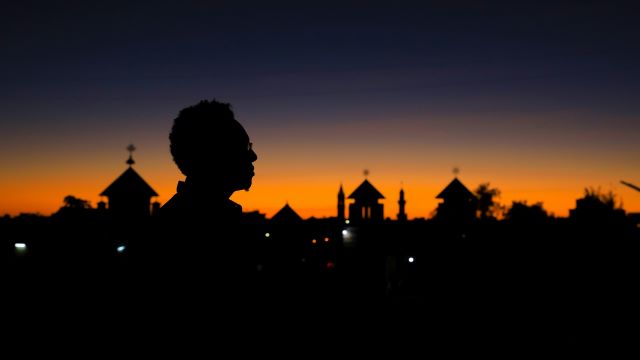
Perched high on the central plateau, the Eritrean capital of Asmara carries the quiet grandeur of a city shaped by layers of history. Its tree-lined boulevards, open piazzas, and unexpected blend of European modernism with African tradition have turned it into a rare architectural showcase—one that increasingly draws visitors from across the globe.
Asmara’s modernist ensemble, recognized by UNESCO as a World Heritage site in 2017, remains the centerpiece of this urban landscape. A walk through its streets reveals an array of architectural forms—art deco cinemas, rationalist government buildings, curved facades of old cafes—that together narrate the imprint of Italian colonialism. What might have once been symbols of occupation now stand as cultural artifacts, preserved in a city where time seems to stretch in unusual ways.
Among the landmarks, the Cathedral of Asmara, formally the Church of Our Lady of the Rosary, commands both attention and reverence. Completed in 1922, the red-brick structure rises with its slender bell tower, a striking presence on Harnet Avenue. Inside, luminous stained-glass windows diffuse colored light across the pews, creating a sense of stillness that contrasts with the bustle of the streets outside. The church endures as both a spiritual center and a reminder of the city’s layered religious history.
Further east, the National Museum of Eritrea houses fragments of an even deeper past. Its exhibitions trace the country’s historical arc, from the ancient kingdom of Aksum to the liberation struggle of the late 20th century. Pottery shards, inscriptions, and statues offer glimpses into civilizations that long predated colonial rule, situating Eritrea within the broader story of the Horn of Africa.
The Fiat Tagliero Building, perhaps Asmara’s most iconic structure, pushes the narrative into the future imagined by the 1930s. Designed by Italian engineer Giuseppe Pettazzi, the former service station was conceived as a concrete aircraft, its wings stretching outward with audacious confidence. Today, it is less a functional building than a symbol—an emblem of the modernist experimentation that still astonishes architects and visitors alike.
Asmara’s appeal, however, extends beyond its monuments. In the city’s open-air markets, vendors arrange spices, fabrics, and handmade goods into kaleidoscopic displays. Cafes, some dating back nearly a century, serve macchiatos and traditional Eritrean coffee in equal measure, blurring cultural lines in daily ritual. Plates of injera, shared communally, anchor conversations that reflect the rhythms of life as much as any building reflects history.
Together, these landmarks and experiences create a portrait of a city that is neither frozen in the past nor rushing headlong into modernity. Instead, Asmara lives at the intersection of memory and continuity. To walk its streets is to move through architectural experiments, historical eras, and everyday rituals, all folded into one evolving narrative.
Sources:
- UNESCO World Heritage Centre, “Asmara: A Modernist City of Africa,” inscription documents, 2017.
- Ruth Iyob, The Eritrean Struggle for Independence: Domination, Resistance, Nationalism, 1941–1993, Cambridge University Press, 1997.
- Tekeste Negash, Eritrea and Ethiopia: The Federal Experience, Nordiska Afrikainstitutet, 1997.
- Edward Denison, Asmara: Africa’s Secret Modernist City, Merrell Publishers, 2003.