
By Roukaya Mahamat Nour
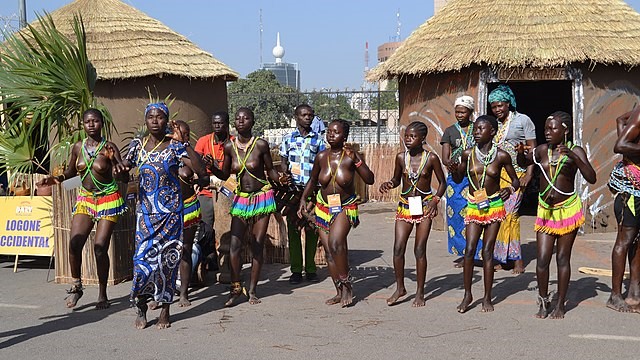
N’DJAMENA, CHAD — On a sunlit morning in the capital’s bustling neighborhood of Moursal, a kaleidoscope of colors sweeps through the dusty air. From the haunting chants of the Teda in the north to the rhythmic drumbeats of the Sara in the south, Chad’s national cultural festival—Fête de la Coexistence Culturelle—is more than a celebration. It’s a statement.
In a country home to over 200 ethnic groups, the threads that might have unraveled society are, instead, being woven into a tapestry of unity.
“We don’t just coexist—we learn from each other,” says Hadjé Souad Abakar, a choreographer from Abéché who now leads a multi-ethnic dance troupe in N’Djamena. “Our diversity is our strength, not our weakness.”
A Mosaic of Traditions
Chad’s immense cultural landscape stretches from the nomadic Arab-Muslim communities of the Saharan north to the animist and Christian farming peoples in the tropical south. Despite this diversity—and sometimes because of it—the nation has cultivated an enduring tradition of cultural diplomacy at the grassroots level.
Events like the National Week of Culture and Arts, hosted annually by the Ministry of Culture, Tourism, and Handicrafts, bring together musicians, poets, and artisans from every region of the country to showcase their heritage (UNESCO – Chad Cultural Heritage).
These gatherings are not only about display—they are about dialogue.
“When my children see a Wodaabe man perform a beauty dance or hear a Ngambaye griot recite ancestral tales, they are witnessing living bridges,” says Dr. Mahamat Adoum, a sociologist at the University of N’Djamena. “Cultural exchange reinforces peaceful coexistence more than speeches ever can.”
Peacebuilding Through Performance
Post-conflict initiatives in Chad, especially after the civil strife of the 2000s, have increasingly leveraged cultural expression as a tool for healing. NGOs such as Search for Common Ground and Afrobarometer have partnered with local leaders to promote interethnic storytelling, music therapy, and youth-led theater in conflict-prone zones like Guéra and Hadjer-Lamis (Search for Common Ground – Chad).
One such initiative, Voix de la Diversité, has trained dozens of young Chadians in radio production, producing weekly programs that feature conversations across ethnic lines, traditional folklore, and peace education.
“When people hear their language, their proverb, their music on national airwaves, they feel seen and respected,” says Zénabé Moussa, a broadcaster from Mongo. “It’s a subtle but powerful form of inclusion.”
Celebrating with Purpose
Beyond radio and theater, cultural festivals have become platforms for reconciliation. In the town of Moundou, the Festival Ndjamena en Couleurs brings together Fulani herders and Kotoko fishermen—two groups with a history of land disputes—for a shared feast, dance contest, and artisan market. Local officials report a measurable drop in tensions during and after such events (African Union – Peace through Culture).
Meanwhile, the Chad Heritage and Intercultural Exchange Program, supported by the European Union, has helped fund interregional art residencies where young creatives collaborate across ethnic and linguistic lines (European Union External Action – Chad).
Building the Next Generation of Unity
At the community level, schools and youth centers are increasingly weaving cultural literacy into their curricula. Students are encouraged to learn each other’s folk tales, instruments, and histories—not merely as academic content, but as a civic imperative.
In the small village of Gounou-Gaya, 11-year-old Fatimé and her classmate Idriss alternate speaking in Kanembou and Mbaye during their morning assembly. “We switch languages to show respect,” says their teacher, Madame Pauline Moundoh. “It teaches empathy without textbooks.”
The Road Ahead
Chad’s diversity, once manipulated for division, is now being reimagined as a foundation for unity. Though economic hardship and political uncertainty remain, cultural diplomacy has carved out a path forward—one drumbeat, one dance, one shared meal at a time.
“Peace in Chad will not come from treaties alone,” says Minister of Culture, Mahamat Saleh Haroun. “It will come from a song sung in many tongues.”
And in towns and villages across this vast nation, that chorus is growing louder.
Sources: