
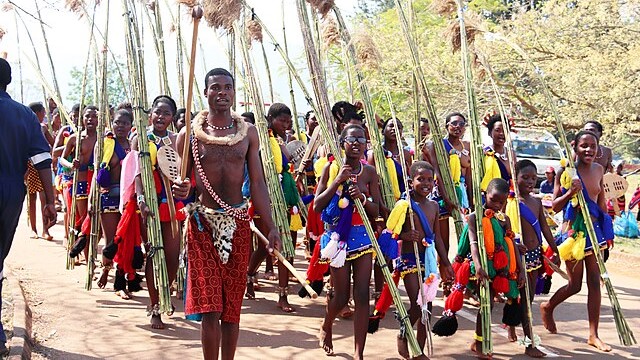
In Eswatini, history is not confined to museums or dusty archives. It unfolds in the rhythm of traditional ceremonies, in the presence of royal villages, and in the voices of those who continue to uphold customs centuries in the making. The kingdom, once known as Swaziland until its renaming in 2018, remains one of the few absolute monarchies on the African continent, its royal traditions deeply interwoven with daily life.
At the center of this heritage stands King Mswati III, whose reign continues a lineage stretching back to the 18th century. Yet the monarchy here is not defined solely by its rulers, but by the cultural fabric that sustains it. Rituals and festivals serve as expressions of national identity, binding past and present in ways that are tangible to both citizens and visitors.
The Umhlanga, or Reed Dance, remains the most striking of these traditions. Each year, thousands of young women gather in vibrant attire to cut reeds, presenting them to the Queen Mother in a ceremony that celebrates both cultural continuity and the ideals of maidenhood. The spectacle, filled with song and movement, is as much about reaffirming collective values as it is about honoring the monarchy itself.
Royal residences, such as the Ludzidzini Royal Village, provide further insight into the structure of Swazi authority. Here, the royal kraals—traditional enclosures that house both ceremonial and domestic life—demonstrate the enduring centrality of kinship and hierarchy. The homesteads, constructed from local materials, embody not only architectural tradition but also the resilience of practices that have survived modernization.
Heritage is also preserved through cultural centers such as the Mantenga Cultural Village, where performances of music and dance convey the rhythms of Swazi life. These settings serve not simply as attractions but as living classrooms, where artisans demonstrate craftwork, meals are shared, and oral histories are passed on. Dishes like sishwala, a thick maize porridge, link the culinary present with ancestral memory, reinforcing the notion that culture is sustained as much around the hearth as it is in the kraal.
The political dimensions of Eswatini’s monarchy add further complexity. The king wields significant power, yet governance here operates within a framework that seeks balance between tradition and the evolving demands of modern society. For many Swazis, debates over authority and representation coexist with reverence for the symbolic role of the monarchy. This interplay reflects the country’s ongoing negotiation between continuity and change.
To encounter Eswatini’s royal history is to witness more than ceremonial pageantry. It is to see the ways in which history remains embedded in daily routines, festivals, and structures of governance. The kingdom’s royal legacy is not a relic of the past but a living force that shapes the cultural identity of its people, offering a rare window into the persistence of tradition in a rapidly shifting world.
Sources:
- Eswatini Tourism Authority. Culture and Heritage in the Kingdom of Eswatini. Mbabane, 2023.
- Dlamini, Hlengiwe. “Royal Ceremonies and the Preservation of Swazi Identity.” African Cultural Review, vol. 12, no. 3, 2021.
- Booth, Alan. Historical Dictionary of Swaziland. Scarecrow Press, 2000.
- Murdoch, Jason. “The Reed Dance: Tradition and Continuity in Eswatini.” Journal of African Studies, vol. 29, no. 1, 2022.