
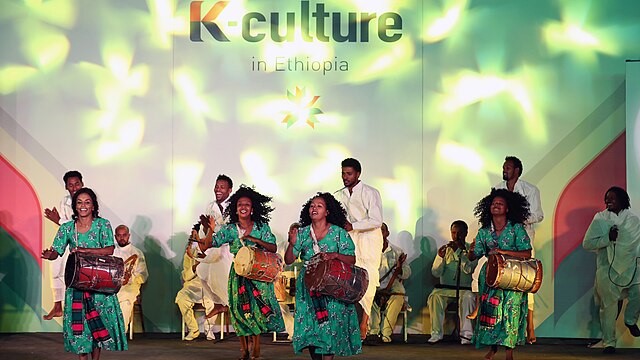
In the highlands of northern Ethiopia, sunlight spills across the honey-colored walls of Lalibela’s rock-hewn churches, their centuries-old carvings still echoing the devotion of the artisans who shaped them from solid stone. Hundreds of miles to the south, in the Omo Valley, the rhythmic beat of drums marks a coming-of-age ceremony as a community gathers to celebrate traditions carried forward for generations. Across this vast country, cultural tours offer a window into Ethiopia’s layered past and its vibrant present, where ancient practices and contemporary life are interwoven.
Ethiopia’s cultural landscape is defined by its diversity. More than 80 ethnic groups call the nation home, each with distinct languages, dress, and rituals that form a mosaic of traditions. In the Omo Valley, tribes such as the Hamar, Karo, and Mursi maintain customs that remain central to their identity. For visitors, observing rites of passage, such as the Hamar’s bull-jumping ceremony or the Mursi’s lip-plate traditions, provides rare insight into the continuity of heritage amid rapid modernization.
History permeates the Ethiopian landscape. The monumental churches of Lalibela, carved into volcanic rock in the 12th and 13th centuries, stand as both architectural marvels and enduring symbols of Christian devotion. Farther north, in Aksum, towering obelisks recall a civilization that once dominated the region, trading with Rome, India, and Arabia. Ethiopia’s layered religious history—embracing both Christianity and Islam—remains evident in its monasteries, mosques, and annual festivals, which continue to draw pilgrims from across the country.
Cultural tours often turn to food as another entry point into Ethiopia’s traditions. Meals are anchored by injera, the spongy flatbread made from fermented teff flour. Shared platters of stews, or wot, create both a culinary and social experience, underscoring the role of food as a symbol of hospitality. From the fiery doro wot to the rich, earthy flavors of vegetarian dishes such as shiro, Ethiopian cuisine tells its own story of community, history, and resilience.
Markets, too, are central to the country’s cultural life. In Addis Ababa, the Mercato—one of Africa’s largest open-air markets—sprawls across miles of alleyways where traders sell spices, textiles, and handwoven baskets. Regional markets mirror this vitality, offering a glimpse into local economies and artistry. The purchase of beadwork, pottery, or woven cloth not only sustains livelihoods but also carries a tangible reminder of Ethiopia’s artistic traditions.
Guided tours play a crucial role in bridging the gap between observation and understanding. Local guides, often steeped in oral history, interpret the layers of significance behind ceremonies, architecture, and customs. Their perspective helps frame Ethiopia not merely as a destination but as a living narrative—one that binds together past and present through ritual, faith, and community.
Cultural tours in Ethiopia reveal a country whose heritage is at once ancient and evolving. From the carved stone sanctuaries of Lalibela to the communal feasts of injera and wot, each encounter offers an entry point into a society where traditions endure, adapt, and continue to shape identity.
Sources:
- Marcus, Harold G. A History of Ethiopia. University of California Press, 2002.
- Pankhurst, Richard. Cultural History of Ethiopia. Oxford University Press, 1990.
- UNESCO World Heritage Centre. “Rock-Hewn Churches, Lalibela.”
- Levine, Donald N. Wax and Gold: Tradition and Innovation in Ethiopian Culture. University of Chicago Press, 1965.