
In Egypt, history is never far from reach. The country’s landscape—etched with pyramids, temples, and tombs—carries the weight of civilizations that flourished along the Nile thousands of years ago. For travelers, cultural tourism offers a rare chance to witness these layers of the past not as distant relics, but as living elements of a society that continues to adapt while honoring its heritage.
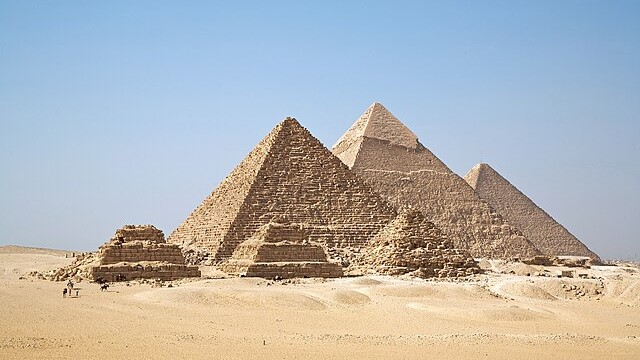
Cairo provides the most familiar gateway. On the Giza Plateau, the Pyramids rise from the desert with a stark grandeur that defies the passage of 45 centuries. The Great Pyramid’s sheer scale, aligned with celestial precision, remains a monument to both human ambition and engineering skill. Nearby, the Sphinx—its eroded features still commanding—stands as a silent sentinel, a figure as enigmatic now as it was in antiquity.
The city’s Egyptian Museum deepens that encounter with history. Within its crowded halls, thousands of artifacts reveal glimpses of daily life and divine ritual. The treasures of Tutankhamun, discovered in the Valley of the Kings nearly a century ago, remain among the most striking. His golden mask, with its intricate craftsmanship, embodies both the opulence of pharaonic culture and the enduring mystery of a boy-king whose reign was cut short.
Southward, in Luxor, the scale of Egypt’s ancient legacy grows even more imposing. The Valley of the Kings, hewn into desert cliffs, holds the tombs of rulers whose power extended from the Mediterranean to Nubia. Walls painted in brilliant hieroglyphics narrate journeys into the afterlife, preserving a belief system that sought permanence beyond death. Across the river, the vast Karnak and Luxor temples still echo with the processions and rituals of a civilization that regarded the divine as inseparable from political life.
Aswan offers a different rhythm. Here, the Nile bends slowly past granite quarries once used for colossal statues and obelisks. Feluccas glide along its waters, their sails catching the late-afternoon light. The nearby island temples, including Philae, preserve traces of ancient devotion while existing in a landscape still inhabited and animated by Nubian culture. The blending of tradition with contemporary life underscores how Egypt’s history is not confined to monuments but woven into daily existence.
Markets in Cairo and Luxor spill over with the scent of spices and the sound of bargaining, while artisans keep alive crafts passed down through generations. Conversations with locals often reveal how ancient heritage continues to shape identity, even as modern Egypt grapples with change. Cultural tourism, in this sense, is more than sightseeing; it is an encounter with a society where the past and present are in constant dialogue.
For many, the impact of such a journey endures well beyond departure. The stones of Giza, the painted walls of Luxor, and the quiet flow of the Nile offer not only windows into antiquity but also insights into resilience and continuity. Egypt’s cultural landscape remains a testament to human ingenuity and spiritual imagination, a history still unfolding in the everyday lives of its people.
Sources:
- Baines, John, and Jaromír Málek. Atlas of Ancient Egypt. Facts on File, 2000.
- Wilkinson, Toby A. H. The Rise and Fall of Ancient Egypt. Random House, 2010.
- El-Din, Gamal Nkrumah. “Luxor: The World’s Greatest Open-Air Museum.” Al-Ahram Weekly, 2018.
- Reid, Donald Malcolm. Whose Pharaohs? Archaeology, Museums, and Egyptian National Identity from Napoleon to World War I. University of California Press, 2002.