
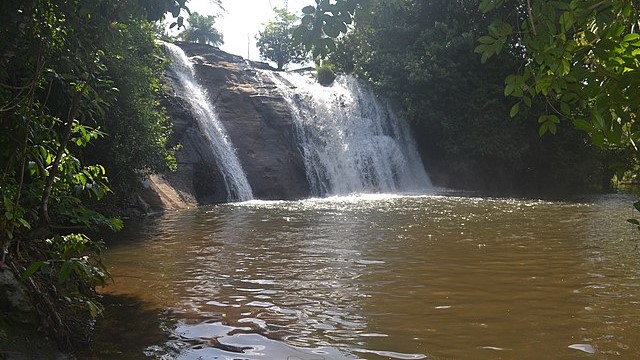
In the highlands of West Africa, Guinea reveals itself as a country of unexpected beauty. The land shifts from rolling savannas to dense forests, from plateaus carved by rivers to waterfalls concealed in the folds of remote valleys. To move across its varied terrain is to encounter not only natural spectacle but also the quiet rhythms of life that tie communities to their environment.
Among the country’s most celebrated regions is the Fouta Djallon, a plateau that dominates central Guinea. Rising in a series of dramatic cliffs and escarpments, the area is a source of major West African rivers, including the Niger and Senegal. Here, terraced farmland clings to hillsides, and trails wind through forests alive with bird calls and the rustle of primates in the canopy. The air is cooler, the horizons broader, and the scenery recalls landscapes more often associated with mountain nations than coastal West Africa.
The waterfalls of the Fouta Djallon, cascading from high ridges into deep pools, remain some of the region’s most enduring attractions. Kambadaga Falls, hidden within thick forest, announces itself long before it appears. The sound of water pounding rock carries across the trees, guiding trekkers toward the mist and spray of its three-tiered drop. At its base, pools of clear water collect—inviting to the eye, though formidable in current.
To the south, along the Bafing River, quieter cascades form natural sanctuaries where the pace of the landscape slows. These falls, less frequented than their northern counterparts, offer scenes of stillness: water slipping over stone, framed by lush vegetation, accompanied only by birdsong and the occasional call from a distant village. They are places for contemplation as much as for exploration.
The experience of Guinea’s landscapes is never separate from its people. Villages scattered across the plateau and valleys serve as waypoints where hospitality is woven into daily life. Visitors are often welcomed with a meal of rice or cassava, perhaps followed by the rhythms of drumming or traditional dance. In these moments, the grandeur of the natural world meets the warmth of human connection, shaping a fuller portrait of the country.
Preservation remains an urgent consideration. Guinea’s ecosystems face pressures from logging, mining, and expanding agriculture. For those engaged in conservation and tourism, the priority has become balancing access with protection: encouraging exploration while safeguarding fragile habitats. Initiatives in the Fouta Djallon have begun to promote sustainable trekking routes and community-based tourism, aiming to ensure that the waterfalls and forests endure for future generations.
Guinea’s landscapes do not unfold as a singular spectacle but rather as a series of revelations—cliffs opening into valleys, rivers breaking into falls, villages offering glimpses of tradition beside trails. In these shifting scenes lies the essence of the country: a land of water and stone, music and silence, heritage and change.
Selected Sources
- Bah, Alpha Oumar. Tourism and Natural Heritage in Guinea: A Regional Study of the Fouta Djallon Plateau. University of Conakry Press, 2018.
- UNESCO World Heritage Centre. “Biodiversity and Cultural Landscapes of the Fouta Djallon Highlands.” UNESCO Reports, 2020.
- International Union for Conservation of Nature (IUCN). “Guinea: Protected Areas and Key Biodiversity Sites.” IUCN Publications, 2021.
- McGovern, Mike. Unmasking the State: Making Guinea Modern. University of Chicago Press, 2013.