
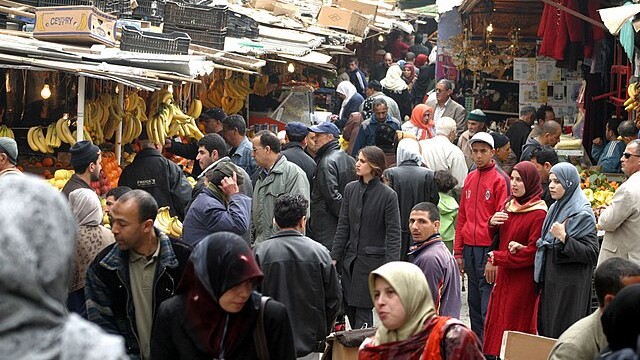
In the cities and towns of Algeria, markets form the pulse of daily life, their narrow lanes alive with sound, scent, and color. These vibrant spaces are far more than places of commerce; they are crossroads of culture, tradition, and community, where the rhythms of everyday existence play out in public view.
Baskets of oranges glow in the morning light, stacked beside figs dark with ripeness. Vendors scoop bright heaps of cumin, paprika, and coriander into paper cones, their voices rising above the hum of barter and conversation. Bolts of fabric in deep indigo, scarlet, and sun-bleached white ripple in the breeze. The market’s visual feast is matched by its soundtrack: the sharp call of a seller advertising fresh mint, the laughter of friends meeting by chance, the rustle of customers sorting through olives or dates.
For generations, these markets have functioned as both economic lifelines and social stages. Neighbors exchange news over pyramids of tomatoes; families inspect the day’s catch at fishmongers’ stalls; traders from the interior arrive with dried herbs and honey from the high plateaus. The goods are as varied as the landscapes they come from—citrus from coastal orchards, spices carried along ancient trade routes, and handmade textiles woven in the country’s mountain villages.
Food is a central lure. The scent of grilled meats and frying pastries drifts from the edges of the stalls, drawing crowds toward street vendors. Plates of couscous, golden and fragrant, are served alongside bourek—delicate pastry rolls filled with spiced meat or vegetables. These dishes, shaped by Berber, Arab, and Mediterranean influences, are more than meals; they are markers of Algeria’s layered history.
Craftsmanship also claims its place. Ceramic bowls painted in geometric patterns, silver jewelry etched with traditional motifs, and handwoven rugs dyed in earthy tones speak to artisanal traditions that persist despite the spread of mass-produced goods. Each piece carries the touch of the maker, a tangible link to a craft passed down through generations.
To walk through an Algerian market is to witness an unfiltered portrait of the nation: the interplay of modernity and tradition, the diversity of its landscapes mirrored in the diversity of its goods, the shared spaces where commerce merges with community. In the bustle of these markets, the country’s social fabric is on display—woven together, like the textiles on offer, in patterns both intricate and enduring.
Sources: