
By Brigitte M’Bali-Nzapa
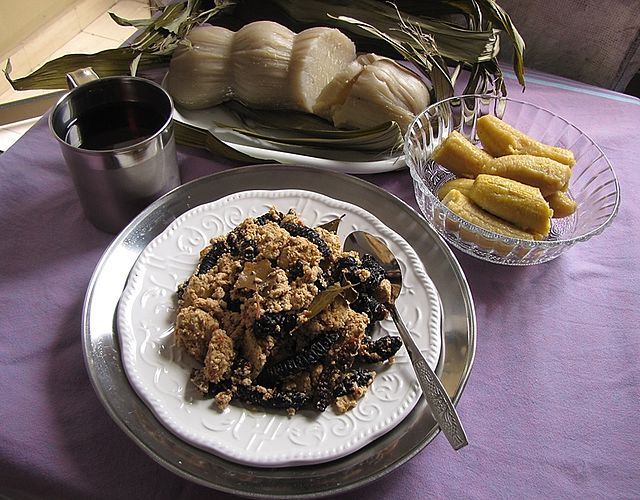
BANGUI, Central African Republic — In a shaded courtyard off a quiet Bangui avenue, the scent of slow-simmering gozo — fermented cassava — coils through the air, intertwining with the nutty depth of kanda ti nyma, a groundnut-and-meat stew. The fire crackles softly beneath the clay pot where Chef Clarisse Dambou stirs with deliberate rhythm, her expression one of measured concentration.
For decades, the cuisine of the Central African Republic — forged from rainforests, rivers, and the intertwined traditions of more than 80 ethnic groups — remained largely absent from international menus. Today, it is edging toward the global culinary conversation, buoyed by a new generation of chefs, food historians, and cultural advocates determined to elevate it beyond the borders of this landlocked nation.
Over the past year, familiar local staples have begun appearing in unlikely places. Sauce gombo (okra stew), fiery pili-pili condiments, and wild forest mushrooms now surface in Parisian bistros, Senegalese food halls, and Brooklyn pop-ups. On social media, videos of traditional Central African cooking have drawn millions of views, reframing it as not just an “exotic” curiosity but a sophisticated, deeply rooted cuisine.
A Cuisine Shaped by Land and Memory
Central African cooking is grounded in the seasonal abundance of its terrain: cassava, yams, leafy greens, bushmeat, freshwater fish, and native seeds. Meals are often coaxed into being over wood fires in earthen pots, where patient, slow cooking allows flavors to deepen.
“The palate is bold — fermented, spicy, earthy — yet capable of great subtlety,” said Dr. Jean-Marie Zangbapou, a food anthropologist at the University of Bangui who has spent more than a decade documenting regional recipes. “It is a record of survival, migration, and ingenuity. Every bite carries a story.”
The Musée National Barthélemy Boganda recently opened an exhibition tracing the role of food in community rituals, peacemaking, and traditional medicine. Among its displays: woven spice baskets, heirloom grinding stones, and annotated recipe manuscripts preserved by village elders.
A Rising Generation
Across Africa and in diaspora hubs abroad, chefs of Central African heritage are reimagining familiar flavors for cosmopolitan audiences. In Marseille, Emmanuel Mobélé — trained at Le Cordon Bleu but grounded in his grandmother’s rural kitchen — opened Tî Nzoni (“The Hearth”) in 2024. The restaurant’s menu fuses classic dishes with modern technique: maboké de poisson (banana leaf–steamed fish) paired with cassava foam, garnished with foraged herbs; palm wine served in delicate crystal stemware.
The establishment’s recent profile in Le Monde sparked a rush of new patrons curious to taste the flavors of Mobélé’s childhood. “People are stunned,” he said. “They never imagined cassava could be so expressive.”
In Bangui, women’s cooperatives like Les Mères de Nzila are anchoring the revival in community. Supported by UN Women, the group has trained hundreds in food entrepreneurship — from pickling and preserving to packaging for export. Weekly markets draw both locals and visiting aid workers, eager for a plate of heritage cooking.
Persistent Challenges
Despite the rising interest, obstacles remain significant. Limited infrastructure, disrupted supply chains, and intermittent conflict complicate efforts to expand or export. Key ingredients such as mbika seeds or fermented caterpillars are difficult to source beyond the region.
The nation’s ongoing food insecurity underscores the complexity of celebrating its culinary heritage. The World Food Programme estimates that 2.4 million Central Africans face acute hunger — a reality that weighs heavily on those shaping the cuisine’s future.
Some chefs, including Mobélé, now funnel part of their profits into rural sustainability programs. Others partner with NGOs to offer affordable meals and training in displaced communities. “We cannot celebrate without also nourishing,” Dambou said quietly, pausing over her simmering pot.
Looking Ahead
With digital platforms connecting kitchens from Bangui to Brooklyn, and a global appetite for authenticity on the rise, more doors are opening for this historically overlooked cuisine. In January, Tî Nzoni was shortlisted for the Basque Culinary World Prize, honoring chefs who use gastronomy for social impact. Later this year, a Central African delegation is expected at Terra Madre, the international food summit hosted by Slow Food.
“Cuisine has always traveled,” said Dr. Zangbapou. “But now, our cuisine is not simply traveling — it is arriving.”
As dusk settles over Bangui, Dambou sprinkles crushed red ants into a pot of ngoundja — a spinach-and-peanut dish passed down through generations. Around her, apprentices jot notes and angle their phones for photos. The chef inhales the aroma, then nods.
“It is ready,” she says. “Let them taste who we are.”
Sources:
- World Food Programme. Central African Republic: Overview. 2025.
- Zangbapou, Jean-Marie. Interview with author. Bangui, 2024.
- Le Monde. “À Marseille, un chef revisite les saveurs de la Centrafrique.” November 2024.
- Musée National Barthélemy Boganda. Cuisine et Mémoire exhibition catalogue, 2024.