
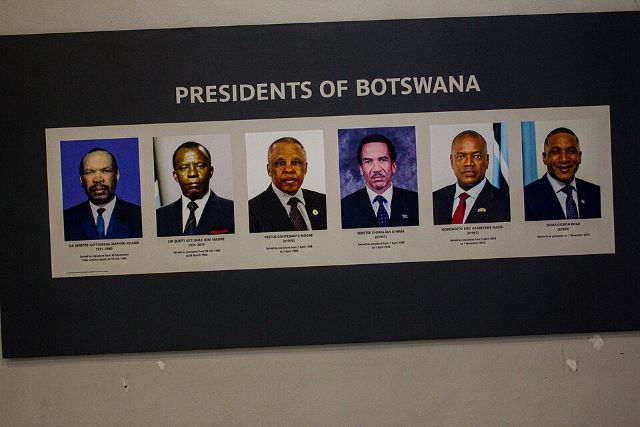
Botswana holds a distinctive position in African politics as a nation with sustained democratic governance and institutional stability since independence in 1966. The country’s political system, anchored in a presidential structure and regular multi-party elections, has shaped regional perceptions of governance and democratic accountability across southern Africa.
Constitutional Framework and Institutional Design
Botswana’s constitution establishes a presidential system in which the head of state and head of government are unified in a single executive office. The legislature comprises an elected National Assembly alongside a House of Chiefs, a chamber reflecting traditional authority structures and representing both elected and hereditary representatives. This bicameral arrangement attempts to balance modern democratic representation with customary governance traditions embedded in Botswana’s social fabric.
The judicial system operates independently, with a hierarchical court structure culminating in the Constitutional Court. This institutional separation of powers has enabled Botswana to maintain rule-of-law frameworks that distinguish it within the southern African region. The independence of judges and the judiciary’s capacity to review legislative and executive actions remain central to Botswana’s governance model, though tensions over judicial resources and capacity periodically emerge.
Electoral Systems and Party Competition
Botswana conducts elections to the National Assembly at regular five-year intervals, with voting rights extended to all citizens aged 18 and above. The electoral system employs a first-past-the-post mechanism in single-member constituencies, a framework that has historically advantaged larger parties while constraining smaller political movements. This system has enabled the Botswana Democratic Party to maintain parliamentary dominance across multiple electoral cycles, though opposition parties periodically gain significant representation.
The political landscape includes multiple registered parties competing across constituencies, with campaigns and political discourse generally conducted with limited reports of severe violence or systematic suppression. Opposition movements have contested elections, secured parliamentary seats, and engaged in legislative debate. However, questions persist regarding whether structural features of the electoral system, campaign finance dynamics, or media access patterns create asymmetries favoring the governing party.
Civil Society and Media Environment
Botswana’s civil society maintains a presence spanning human rights advocacy, labor organizations, business associations, and community groups. Freedom of association and assembly are constitutionally protected, enabling these organizations to operate, though operational constraints and resource limitations affect their capacity and reach. Civil society organizations have engaged in policy advocacy, election monitoring, and public education on governance issues.
The media environment includes state-owned and private broadcast outlets alongside print publications and digital platforms. Press freedom frameworks exist within the constitutional order, yet questions arise regarding editorial independence, resource concentration, and unequal access to advertising revenue and distribution networks. International assessments of media freedom in Botswana have noted both protective legal frameworks and practical constraints on investigative journalism and diverse editorial voices.
Governance Challenges and Systemic Issues
Botswana’s political system confronts persistent challenges spanning corruption allegations, bureaucratic accountability, and service delivery effectiveness. Institutional mechanisms for combating corruption exist through specialized units and investigative bodies, yet questions endure regarding the consistency of enforcement and the independence of accountability institutions from political pressure. High-profile corruption cases have proceeded through courts, though concerns emerge around access to justice and the resources available to investigative agencies.
Development of public institutions remains an ongoing concern, with disparities in capacity across government ministries and local government structures. Decentralization efforts have sought to devolve authority to district and local levels, yet implementation has been uneven. Urban-rural disparities in access to government services, public infrastructure, and economic opportunity persist as structural challenges shaping political grievances and policy demands.
Traditional Authority and Customary Governance
Botswana’s political system incorporates chieftaincy institutions alongside elected government structures. Chiefs hold constitutionally recognized roles in the House of Chiefs and retain authority over customary law matters affecting land allocation, family relations, and dispute resolution in many communities. This dual system attempts to integrate traditional governance with modern democratic frameworks, creating both institutional complementarities and potential jurisdictional tensions.
The relationship between customary law and statutory law remains an area of ongoing negotiation. Questions arise regarding the authority of traditional courts, the applicability of constitutional rights protections within customary dispute resolution, and the extent to which chieftaincy institutions can adapt to changing social expectations around gender equality and individual rights. These tensions reflect broader questions in African governance about integrating traditional authority with constitutional democracy.
Outstanding questions
How effectively do Botswana’s institutional checks and balances prevent executive overreach in practice, and what mechanisms exist to constrain presidential power when democratic norms are tested?
What structural reforms to the electoral system, campaign financing, or media regulation might enhance competition and representation for smaller parties and marginalized constituencies?
How can customary governance institutions be reformed to align with constitutional rights protections while maintaining social legitimacy and community trust?
Sources