
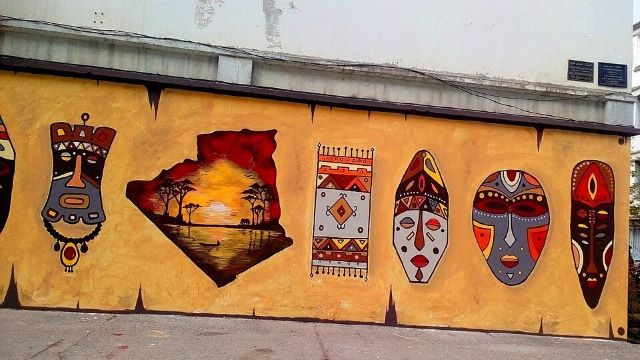
Algeria operates as a semi-presidential republic with a complex institutional framework shaped by decades of independence struggle, civil conflict, and constitutional evolution. The country’s political architecture reflects ongoing tensions between executive authority, legislative oversight, and civil society demands for transparency and reform.
Constitutional Framework and Executive Power
Algeria’s political system centers on a president who holds substantial executive authority, supported by a prime minister and cabinet. The constitution establishes a separation of powers, though the presidency has historically dominated decision-making across governance domains. Constitutional amendments have periodically redefined the balance between institutions, with the most significant revisions occurring in response to domestic pressure and shifting political circumstances.
The president serves as commander-in-chief of the armed forces and holds wide-ranging powers including appointment of senior officials, decree authority, and control over security services. The military institution maintains significant influence across state structures, a legacy extending from the country’s independence struggle and civil conflict period. This military-state relationship shapes policy implementation and institutional dynamics across multiple sectors.
Parliament and Legislative Representation
Algeria’s bicameral legislature comprises the National People’s Assembly and the Council of the Nation. The assembly serves as the primary legislative body, with members elected through a mixed electoral system combining proportional and direct representation. The Council of the Nation functions as an upper chamber with advisory and reviewing powers, with membership including both elected and appointed representatives.
Parliamentary operations face persistent questions regarding legislative independence from executive influence. Opposition parties participate in assembly proceedings and serve on committees, though analysts debate the extent of meaningful legislative constraint on executive initiatives. Electoral processes have undergone multiple reforms, reflecting domestic discussions about representation systems and political participation frameworks.
Political Parties and Civil Society Engagement
Algeria permits multiparty competition, with numerous registered political formations spanning different ideological traditions. These include secular nationalist parties, Islamist-oriented movements, Berber rights organizations, and leftist formations. Party representation in parliament varies across electoral cycles, with seat distribution reflecting electoral outcomes and coalition dynamics.
Civil society operates within a complex regulatory environment. Labor unions, human rights organizations, professional associations, and community groups engage with political processes and policy debates. Media outlets function with varying degrees of independence, and social media platforms increasingly serve as spaces for political commentary and civic exchange. The relationship between state authorities and civil society organizations remains an area of ongoing tension and negotiation.
Regional and International Engagement
Algeria holds significant strategic weight within North African and broader African contexts. The country serves as a major energy exporter, with hydrocarbon revenues shaping both domestic politics and international relationships. Diplomatic positioning involves engagement with Arab League initiatives, African Union structures, and multilateral organizations addressing regional security, trade, and development priorities.
The country maintains complex relationships with neighboring states, including Morocco, Tunisia, Libya, and Mali. Border disputes, migration flows, terrorism concerns, and resource competition create persistent diplomatic considerations. Algeria’s internal political developments consequently intersect with regional stability questions and cross-border dynamics affecting governance and security across the Sahel region.
Institutional Reform and Democratic Development
Algeria periodically experiences mobilization around governance reform, democratic expansion, and institutional accountability. Protest movements have emerged responding to economic conditions, political exclusion perceptions, and demands for systemic transparency. These movements highlight underlying social expectations regarding political participation, government responsiveness, and institutional performance.
Constitutional revision processes have included provisions addressing presidential term limits, electoral systems, and institutional mechanisms. Anti-corruption initiatives and transparency measures represent areas where reform discussions concentrate. The effectiveness of institutional reforms in addressing systemic governance challenges remains contested among analysts and civil society observers.
Outstanding questions
How will Algeria’s institutional framework adapt to sustained pressure for greater parliamentary independence and legislative constraint on executive authority, and what mechanisms might facilitate such evolution?
What role will civil society organizations and social movements play in shaping future constitutional amendments and governance reforms, and how might state-society relationships evolve across coming years?
How will Algeria navigate tensions between energy export dependency, economic diversification requirements, and the political pressures these economic conditions generate within domestic governance structures?
Sources