
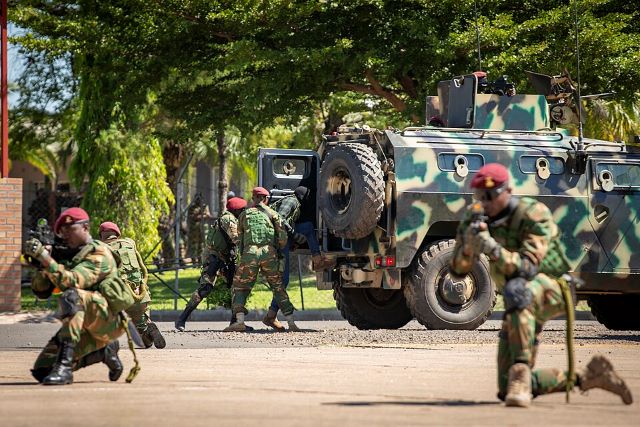
Africa’s political trajectory continues to face significant turbulence as military interventions challenge democratic institutions across the Sahel region while several nations grapple with contested elections and constitutional reforms. The continent recorded its eighth military coup since 2020 with recent developments in West Africa, raising concerns about democratic backsliding at a time when economic pressures and security challenges test civilian governments’ capacity to deliver stability and growth.
West African Democratic Institutions Under Pressure
The Economic Community of West African States (ECOWAS) confronts an unprecedented crisis as member nations experience a wave of military takeovers that have fundamentally altered the regional political order. Guinea-Bissau narrowly avoided joining this trend after security forces successfully defended civilian institutions against attempted destabilization efforts in recent months. The regional bloc has struggled to implement meaningful sanctions that restore constitutional order without further destabilizing affected populations.
Nigeria’s upcoming 2027 electoral preparations have already begun generating political tensions, with opposition parties challenging recent electoral law amendments that critics argue favor the ruling party. The National Assembly’s deliberations on constitutional reforms have stalled amid disagreements over state creation, revenue allocation, and the structure of federalism. These debates occur against the backdrop of ongoing security challenges in the northeast and northwest regions that have displaced millions of citizens.
East African Political Realignments
Kenya’s political landscape remains fluid following the resolution of recent constitutional court challenges to government policy initiatives. The country’s Supreme Court has emerged as a critical institution in checking executive power, with several landmark rulings affecting taxation policies and parliamentary procedures. Opposition coalitions have reorganized ahead of the next electoral cycle, forming new alliances that cross traditional ethnic and regional boundaries.
Ethiopia continues navigating complex federal arrangements as regional states assert greater autonomy over local governance structures. The federal government’s relationship with constituent regions has evolved significantly since the end of the northern conflict, with new power-sharing agreements affecting resource distribution and administrative control. Whether these arrangements will provide sustainable solutions to Ethiopia’s diversity challenges remains unclear as implementation proceeds unevenly across different regions.
Southern African Constitutional Developments
South Africa approaches critical electoral milestones as the African National Congress faces its most significant political challenge since 1994. Recent local election results demonstrated shifting voter preferences that could reshape national politics, with coalition governments now governing major metropolitan areas. The Constitutional Court’s recent rulings on electoral procedures and party candidate selection have established new precedents affecting how political organizations operate within the democratic framework.
Zimbabwe’s political environment shows signs of gradual transformation as economic pressures force reconsideration of previous policy approaches. The ruling ZANU-PF party has initiated internal discussions about succession planning and institutional reforms, while opposition movements work to rebuild organizational capacity following years of restrictions. International engagement has increased cautiously as regional partners seek to support stability while encouraging democratic progress.
Central African Security and Governance Challenges
The Democratic Republic of Congo’s vast territory continues experiencing localized conflicts that affect millions of citizens while the central government works to extend effective authority across all provinces. Recent diplomatic initiatives with neighboring countries have produced mixed results in addressing cross-border security concerns that fuel instability in eastern regions. The upcoming electoral preparations face logistical challenges that may affect voter participation in remote areas where state capacity remains limited.
Central African Republic’s gradual stabilization efforts have achieved modest progress through international partnerships and regional cooperation mechanisms. The government has regained control over significant portions of national territory previously held by armed groups, though sustainable peace requires continued investment in state institutions and economic development. Whether current security improvements can be maintained without substantial international support remains uncertain as donor fatigue affects funding commitments.
Outstanding Questions
Will ECOWAS develop more effective mechanisms to prevent military coups while addressing the underlying governance failures that create conditions for institutional breakdown? Can African Union mediation efforts successfully resolve ongoing constitutional crises without external intervention that may undermine sovereignty principles? How will climate change impacts and economic pressures affect political stability across the continent as governments struggle to meet rising citizen expectations with limited resources?
Sources