
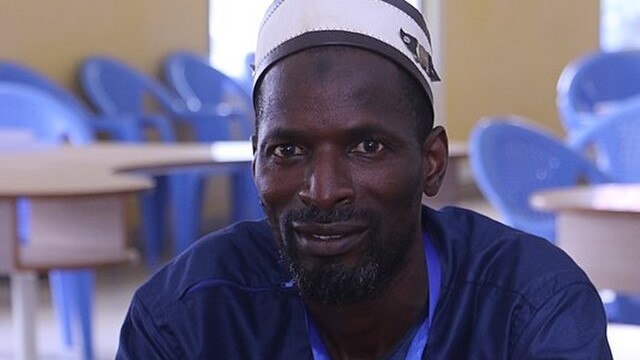
As dusk falls across the hills of Guinea, fires crackle and voices gather. A griot, part historian and part poet, begins to speak, his words rising in rhythm with the night air. Children lean closer, elders nod knowingly, and soon the gathering hums with the cadence of an ancient art form. Storytelling here is not a diversion but a repository of memory, a way of binding past to present.
In West African societies, oral tradition has long been central to cultural identity. In Guinea, this is most vividly embodied by the griots—custodians of lineage and lore whose role transcends mere performance. Their tales are layered with history and allegory, often carrying the collective wisdom of communities. A single story might weave together the victories of warriors, the resilience of ancestors, and moral lessons intended to guide the young.
The act itself is as much performance as narration. Griots punctuate their words with sweeping gestures, facial expression, and song, often accompanied by instruments such as the kora or balafon. Listeners rarely remain silent. Gasps, laughter, or applause ripple through the crowd, turning the exchange into a dialogue. This interplay underscores the communal nature of storytelling, where meaning is shaped not only by the teller but also by those who listen.
Regional variations abound. Among the Malinke, epics recount dynasties and their battles, while the Susu and Fulani traditions emphasize parables of moral instruction. What unites these traditions is their purpose: to preserve continuity in a rapidly changing world. Even in urban centers such as Conakry, where digital media dominates daily life, oral storytelling retains its place. Festivals and cultural workshops encourage younger generations to embrace the craft, ensuring that griots are not confined to history books but remain vital voices of the present.
Modern initiatives have furthered this preservation. Educational programs across Guinea now train apprentices in oral traditions, pairing them with elder griots who serve as mentors. These efforts, often supported by cultural organizations and NGOs, reflect an urgency to safeguard storytelling as a living art, one that globalization has threatened but not erased.
To witness such a gathering is to encounter history in motion. The stories, spoken under the open sky, carry with them echoes of empires, migrations, and collective struggles. They also reflect the values still cherished—resilience, honor, and cohesion. In this way, Guinean storytelling continues to serve as both mirror and map, illuminating where a people have been and where they are headed.
What endures is not simply the content of the tales but the act of telling itself—a reaffirmation that memory, when shared aloud, belongs to all.
Selected Sources
- Hale, Thomas A. Griots and Griottes: Masters of Words and Music. Indiana University Press, 2007.
- Conrad, David C., and Barbara E. Frank. Status and Identity in West Africa: Nyamakalaw of Mande. Indiana University Press, 1995.
- UNESCO. “The Griot Tradition of Oral Storytelling in West Africa.” UNESCO Intangible Heritage Reports, 2020.
- Camara, Sory. Griots of West Africa: Guardians of the Word. Éditions Karthala, 1992.